How do I become a pilot?
- What does a pilot do?
- The types of pilots
- What does the process of becoming a pilot look like?
- What skills would I need to become a pilot?
- Costs, funding and scholarships
- Where can I go and apply to become a pilot?
- Explore stories
What does a pilot do?
Pilots are responsible for flying aircraft safely from one location to another. Depending on their role, they may transport passengers, cargo, military personnel, or provide flying instruction to future pilots.
Flying the aircraft is only part of the job. Pilots also:
- Plan routes and review weather information
- Check aircraft systems before a flight
- Work closely with air traffic controllers and cabin crew
- Monitor fuel, aircraft performance and navigation systems
- Manage unexpected situations safely
- Complete paperwork and flight records
Modern aircraft use advanced technology, but pilots are always responsible for making safe decisions and ensuring each flight operates safely.
No two days are the same, which is one reason many people enjoy a career in aviation.
The types of pilots
| Type of Pilot | What They Do |
|---|---|
| Airline Pilot | Fly passengers on domestic and international flights |
| Cargo Pilot | Transport freight, parcels and essential goods |
| RAF Pilot | Operate military aircraft in defence and support roles |
| Helicopter Pilot | Fly search and rescue, offshore, police or emergency service missions |
| Flight Instructor | Train future pilots |
| Charter Pilot | Fly private passengers and business clients |
| Corporate Pilot | Fly company aircraft for businesses and organisations |
| Aerobatic or Display Pilot | Perform flying displays and aviation competitions |
What does the process of becoming a pilot look like?
Becoming a pilot usually starts in your teenage years by focusing on school subjects like maths, physics, and English, which are important for flight training and exams. Many young people also join groups such as the Air Cadets to gain early experience and decide if flying is right for them. After GCSEs, students normally continue with A‑levels, BTECs, or similar qualifications, while also making sure they meet the medical requirements needed to fly professionally, such as good eyesight and overall health.
Professional flight training
Many aspiring pilots begin professional flight training from age 18.
There are two main training routes, so it is important to know which way you want to do.
- Full-time training programme
- Structured pathway
- Usually completed more quickly
- Often costs more
- Training completed in stages
- Greater flexibility
- Can be combined with work or study
- Costs can be spread over a longer period
During training, pilots learn both practical flying skills and aviation theory.
This usually includes:
- Commercial Pilot Licence (CPL) training
- Airline Transport Pilot Licence (ATPL) theory studies
- Simulator training
- Navigation and flight planning
- Emergency procedures
- Building flying experience
Costs and funding
Professional pilot training is a significant investment. Depending on the route chosen, training can cost between approximately £70,000 and £130,000 or more.
Several schemes can help reduce costs, including:
- Airline-sponsored cadet programmes
- Fully funded airline academies (when available)
- Aviation scholarships and bursaries
- RAF-funded pilot training
- Modular training spread over a longer period
Finding your first pilot job
After completing training, newly qualified pilots begin applying for flying roles. Many start as:
- First Officers with airlines
- Flight Instructors
- Charter pilots
- Regional airline pilots
The time it takes to secure a first flying role varies depending on recruitment levels and industry demand.
As pilots gain experience, they may progress to:
- Senior First Officer
- Training Captain
- Examiner
- Airline Captain
- Management and leadership roles
The experience required for promotion to Captain varies between airlines and operators.
What skills would I need to become a pilot?
Communication & Teamwork
Flying is a team activity that depends on clear communication.
To build up this skill:
- Working in groups on school projects
- Taking part in team sports or group activities
- Practising presentations or debates
- Listening carefully and following instructions
Problem solving & Decision Making
Pilots must think clearly and act safely, often under pressure.
To build up this skill:
- Solving maths and science problems
- Playing strategy or simulation games
- Taking part in STEM challenges
- Making decisions in time-limited tasks
Maths, Science & Technology
Pilots use numerous numbers, systems, and technology every day.
To build up this skill:
- Studying maths and science subjects
- Learning how systems work (IT, engineering, electronics)
- Using flight simulators or STEM software
- Practising calculations and data interpretation
Thinking & Reasoning
Pilots use logic and quick thinking to make safe decisions what can save lives. They must understand information, assess situations, and choose the best action, even under pressure.
To build up this skill:
- Solving maths problems and logic puzzles
- Playing strategy or problemsolving games
- Taking part in STEM challenges or competitions
- Practising making decisions and explaining your reasoning
Attention to Detail & Focus
Aviation relies on following procedures and noticing small but important details.
To build up this skill:
- Following stepbystep instructions in science experiments or practical tasks
- Checking your work carefully in exams or coursework
- Playing activities that require accuracy, such as coding, model building, or puzzles
- Practising focus by completing tasks without distractions
Professionalism & Responsibility
Pilots are trusted professionals who must always act responsibly.
To build up this skill:
- Managing your time and meeting deadlines
- Taking responsibility in leadership roles or parttime work
- Learning how to stay calm under pressure
- Reflecting on feedback and aiming to improve continuously
Observation & Recording
Pilots must notice important details and record information accurately. They monitor instruments, check systems, and keep records to ensure flights run safely and smoothly.
To build up this skill:
- Carrying out science experiments and recording results clearly
- Practising notetaking in lessons
- Observing details in tasks like drawing, data collection, or fieldwork
- Keeping logs or records in activities such as sports or projects
Costs, Funding and Scholarships
Scholarships and bursaries
Several organisations help young people access aviation opportunities.
- Royal Aeronautical Society Scholarships – Provides scholarships, bursaries and educational support.
- Air League Scholarships – Provides funded flying, gliding and aviation opportunities.
- Honourable Company of Air Pilots – Offers scholarships, mentoring and aviation support.
- Royal Aero Club Trust – Supports aviation scholarships and development opportunities.
- British Women Pilots’ Association – Supports women pursuing aviation careers.
- Aerobility – Supports disabled people wishing to experience and develop aviation skills.
- British Gliding Association – An affordable route into flying experience and aviation training.
- Light Aircraft Association – Information on general aviation and recreational flying.
Where can I go and apply to become a pilot?
There are many different pathways into becoming a pilot depending on the type of flying you want to do. Each route has its own employers, requirements, and career experiences.
Commercial Pilot
You apply directly to airlines for roles such as Cadet Pilot or First Officer. Airlines recruit through their own career’s websites and assessment programmes. Some airlines also run sponsored or mentored training schemes linked to specific flight schools. Pilot jobs are accessed through airlinepartnered flight schools, where training is linked to future airline recruitment. These programmes are competitive and often require aptitude testing and interviews before training begins. Professional pilot training includes studying 13 ATPL theory subjects and passing a series of examinations.
They can be accessed through these links:
- Skyborne Airline Academy
- CAE Oxford Aviation Academy (easyJet, TUI pathways)
- Leading Edge Aviation (Oxford)
- Acron Aviation Academy (formerly L3Harris)
Other UK Commercial Training Schools
RAF Pilot (Royal Air Force)
You apply directly to the RAF for roles such as Pilot through the official RAF recruitment website. Selection is handled through a structured officer-entry process rather than a traditional job application. The RAF recruits’ candidates before flight training and fully funds all training from the beginning. Entry involves a multi-stage assessment process including aptitude testing, interviews, medical and fitness evaluations, and officer training. Candidates are selected based on leadership potential, academic ability, and performance under pressure rather than prior flying experience. Training is delivered internally by the RAF and leads directly to an operational pilot role.
General Aviation (Charter, Private, Flight Instruction)
You apply directly to aviation companies, flying schools, or private operators for roles such as Flight Instructor, Charter Pilot, or General Aviation Pilot. Unlike airlines, recruitment is often less centralised and relies on direct applications, networking, and industry connections. Most roles require you to already hold licences (CPL/ATPL) and sufficient flight hours before applying. Flight schools themselves can act as entry points, where newly qualified pilots may work as instructors to build hours. Jobs are typically accessed through aviation job boards, company websites, or by contacting operators directly.
Useful links:
Cargo / Freight Aviation
You apply directly to cargo operators such as DHL, FedEx, or UPS through their careers websites or recruitment channels. These employers usually require pilots to already have significant flight experience and licences before applying, rather than training candidates from scratch. Some cargo operators recruit via partner airlines or internal progression schemes. Entry typically involves competitive selection processes, simulator assessments, and interviews. Many pilots enter cargo aviation after gaining experience in passenger airlines or regional flying roles.
Useful links:
Sports / Racing Aviation (Aerobatics, Air Racing)
You don’t usually apply through formal job postings; instead, opportunities are gained through personal progression, competition, and sponsorship. Pilots typically start by training in aerobatics at flight schools or clubs, then compete in events to build reputation and skill level. Entry into professional air racing or display flying depends heavily on experience, networking, and performance in competitions. Sponsorships, partnerships, and affiliations with organisations or teams are key to progressing. This pathway is less structured than airline or RAF routes and relies on self-development and visibility within the aviation community.
Useful links:
- British Aerobatic Association
- Royal Aero Club (UK aviation competitions & events)
- Aerobatic training via UK flight schools
Explore stories
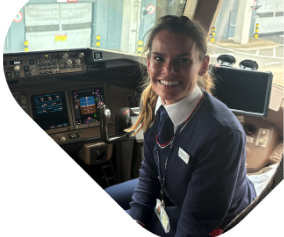
Genevieve Pearmaine, Senior First Officer (Boeing 777), British Airways
I grew up around aviation because my dad was an aircraft engineer, but becoming a pilot never felt like an option. I had never seen a woman flying an aircraft, so the idea didn’t occur to me. That changed when I took a year out after my A‑levels and joined British Airways as cabin crew. On one of my early trips, I met a female pilot for the first time. Seeing her in the flight deck opened a door I hadn’t realised was there, and that moment sparked my dream of becoming a pilot.
Once I knew what I wanted to do, I worked as cabin crew for five years to save money and eventually took a large loan to pay for flight school. It was daunting not knowing if I’d get a job afterwards, but I kept going. After qualifying, I returned to British Airways in a ground role while applying for flying jobs. My first flying position was with BA City Flyer at London City Airport, where I gained great hands‑on experience. Later, I joined British Airways on the long‑haul Boeing 777 fleet, where I’ve flown for around ten years, with breaks for maternity leave.
A typical working day starts long before I reach the airport. Even if I’m flying in the afternoon, I’m up at 6am with my three children, doing the school run and morning routine. After that, I look over the flight plan: our route, the weather, the airspace we’ll cross and the airfields we may need. It helps me to start the day feeling prepared.
At work, I meet the captain, and we go through everything together. We review notices, check the paperwork, agree on the fuel plan and then head to the aircraft. The 90 minutes before departure are some of the busiest of the day, as this is when we carry out the technical checks, prepare the flight deck and meet the crew.
Once we’re flying, the autopilot helps, but we are always monitoring and managing the aircraft. On long haul flights, we can be far from diversion airfields, so we constantly review the weather and plan ahead. We also mentally practice our emergency procedures every flight, so if anything happens, our reactions are calm and clear.
Long haul flying can be hard on your body clock, and sometimes I miss family moments. But I love that every day is different. Working with people from all backgrounds, problem‑solving on the go and travelling to amazing places make it worth it. My advice is to dream big and choose subjects you enjoy – if you’re motivated by something, you’ll push yourself further.
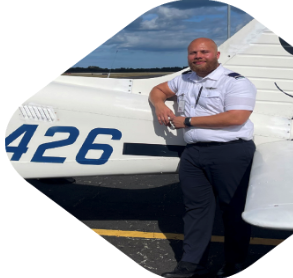
Jordan Smith, Cadet Pilot, Speed bird Pilot Academy, British Airways
Jordan is training to become a commercial pilot through the fully funded Speedbird Pilot Academy. He has wanted to fly since his first lesson at 13, and has built experience through the Air Cadets, a gliding scholarship and other funded opportunities. Out of almost 190 hours in the air, he has only ever paid for one.
He is halfway through his commercial pilot course, having completed the single engine phase and preparing for the multiengine stage. His training days involve checking the next day’s schedule, reviewing lesson plans, looking at the weather, meeting his instructor and carrying out a full walkaround of the aircraft.
Most lessons involve him flying while the instructor supervises. Early starts can be tough, but seeing his progress keeps him motivated. Once he completes his training and type rating, he expects to be flying the Airbus A320.